Stiff Peaks Egg Whites: Step-by-Step With Photos
Whipping egg whites to a stiff peak is a skill that can improve your baking and cooking. From light and airy angel food cake to decadent mousses and soufflés, perfectly whipped egg whites are the secret ingredient to these dishes — including my favorite waffle recipe.

What Are Stiff Peaks?
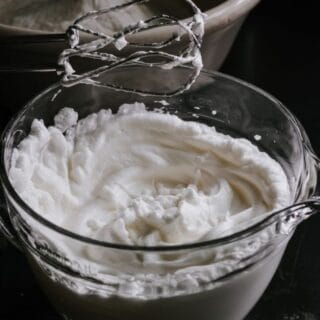
Stiff peaks form when you whip egg whites until they hold their shape and point straight up without drooping when you lift the whisk, with a glossy sheen on the surface. It typically takes 4-5 minutes with an electric mixer on medium-high speed, starting with room-temperature egg whites in a clean, grease-free bowl.
(Keep reading to see exactly what each stage looks like, plus the tools and technique that make it foolproof.)
What Do Stiff Peaks Look Like? (Stages of Egg Foam)
Egg whites move through five visible stages as you whip them. Here’s what to look for at each one:
Foamy Stage: Tiny bubbles appear throughout the whites, and the liquid turns pale and cloudy.
Soft Peak Stage: The whites turn frothy and hold a soft peak that flops over when you lift the whisk.
Medium Peak Stage: The whites hold a definite peak that curves slightly at the tip.
Firm/Stiff Peak Stage: The whites hold a stiff peak that points straight up and doesn’t droop when you lift the whisk, with a glossy sheen on the surface—this is the maximum air you can incorporate and the point most recipes call for.
Over-Beaten Stage: Keep whisking past stiff peaks, and the whites turn dry and grainy and lose their structure.
What You Need to Whip Egg Whites to Stiff Peaks
Eggs: Use room-temperature eggs for the best results — they whip more easily than cold eggs. Separate the yolks from the whites while cold, then let the whites sit out for about 30 minutes before whipping.
Egg Separator: A simple tool for cleanly separating yolks from whites — the white drips through while the yolk stays on top.
Whisk: A wire whisk works, but an electric mixer (hand-held or stand mixer with the whisk attachment) makes the process much faster and easier.
Mixing Bowl: Use a large glass, stainless steel, or copper bowl. A bowl that’s too small restricts the whisk and slows down air incorporation; plastic can retain traces of fat that hinder whipping.
Special Tools (affiliate links): Egg Separator | Electric Mixer | Mixing Bowl | Copper Bowl

How to Whip Egg Whites to Stiff Peaks
1. Separate the egg whites. Use an egg separator, or crack the egg and let the white slide into a clean bowl. Separate while cold, then let the whites come to room temperature for about 30 minutes before whipping.
2. Start whipping. Begin at low speed until the whites turn foamy, then increase to high speed.
3. Whisk to the stage you need. Keep whisking and check regularly against the stages above—most recipes call for stiff peaks, but some may call for soft peaks instead.
4. Use immediately. Once whipped, fold the whites gently into your batter right away. The longer they sit, the more air they lose, resulting in a denser final product.

Tips for Whipping Egg Whites to Perfect Stiff Peaks
- Use room-temperature eggs for maximum air incorporation and fluffier results.
- Choose fresh eggs — fresher eggs have more stable proteins and whip into a stronger foam.
- Keep everything grease-free. Even a trace of fat on your bowl, whisk, or spatula can prevent whites from whipping properly. Clean with a mix of lemon juice and vinegar, then rinse and dry thoroughly.
- Use the right bowl. Stainless steel, glass, or copper are best; plastic can retain fat residue.
- Separate carefully into a separate bowl first, so a stray bit of yolk only costs you one egg white instead of the whole batch.
- Watch closely — egg whites whip quickly, and over-whipping leads to a grainy, dry texture.
- Fold gently once whipped to preserve as much volume as possible.
To help egg whites hold their shape: add about 1/8 teaspoon of acid (cream of tartar, white vinegar, or lemon juice) per egg white once soft peaks form. If your recipe calls for sugar (like a meringue), add it slowly after soft peaks form — too early or too fast, and it can prevent the foam from forming properly.
Whipping to Stiff Peaks: By Hand vs. Electric Mixer
An electric hand mixer or stand mixer gets you to stiff peaks in about 4-5 minutes on medium-high speed. Whipping by hand with a wire whisk takes considerably longer — usually 8-10 minutes of steady, vigorous whisking — since you’re working against the same air-incorporation process without the mixer’s speed. Either method works; a hand mixer is just faster and easier on your arm.
Can you whip egg whites in a blender?
It’s not recommended. Blenders are built to chop and puree rather than incorporate air, so they struggle to whip egg whites to true stiff peaks — you’ll usually end up with a foamy, unstable result instead.
Frequently Asked Questions
What do stiff peaks look like?
Stiff peaks stand straight up and hold their shape without drooping when you lift the whisk, with a glossy sheen on the surface—that glossy look means you’ve reached maximum air incorporation.
How long does it take to beat egg whites to stiff peaks?
Typically 4-5 minutes with an electric hand mixer on medium speed.
Why won’t my egg whites stiffen?
The most common cause is fat — from egg yolk mixed into the whites, or leftover grease residue in your bowl or on your beaters.
Is it better to whip egg whites cold or room temperature?
Cold eggs are easier to separate cleanly, but egg whites whip to a greater volume once they’ve warmed up for about 20-30 minutes.
Can you over-whip egg whites?
Yes — past the stiff peak stage, the whites turn dry, grainy, and start to lose their structure, as described in the over-beaten stage above. If this happens, start over with fresh egg whites.
How many egg whites equal 1/4 cup?
About two large egg whites equal roughly 1/4 cup, though this can vary slightly by egg size.
Recipes That Use Whipped Egg Whites
Waffles: Fluffy on the inside, perfectly crisp on the outside — and you can freeze extras for a quick breakfast.
How to Whip Egg Whites to a Stiff Peak
Ingredients
- 4 large egg whites room temperature
- 0.5 teaspoons cream of tartar white vinegar, or lemon juice (optional, for stability)
Instructions
- Separate 4 large egg whites, room temperature from the yolks while still cold, using a clean egg separator or by carefully passing the egg between shell halves. Let the whites sit out to come to room temperature for about 30 minutes before whipping.
- Whip the egg whites at low speed until foamy and frothy, then increase to high speed.
- Once soft peaks form, add 0.5 teaspoons cream of tartar, white vinegar, or lemon juice (optional, for stability) to help the whites hold their shape and increase volume.
- Continue whisking until the whites hold a stiff peak that points straight up without drooping, with a glossy sheen on the surface. This typically takes about 5 minutes total with an electric mixer. Check over to avoid over-whipping.
- Use immediately: Gently fold the whipped whites into your batter right away — the longer they sit, the more air they lose.
Notes
As an Amazon Associate, I earn from qualifying purchases. This post may contain affiliate links, which means I may earn a small commission at no extra cost to you if you click through and make a purchase. Thank you for supporting Rocky Hedge Farm!

About Sarah
Wife. Mother. From-Scratch Cook. Homemaker.
I’m Sarah, the creator of Rocky Hedge Farm, where I share my love for simple living, homemade meals, and creating a cozy home. As a wife and mother, I’m passionate about slowing down, cooking from scratch, and finding joy in the everyday moments of life. From DIY projects and family-friendly recipes, I hope to inspire others to embrace a life rooted in simplicity and warmth.
follow along


